



5-HT3 Receptor
5-HT3 receptor is a serotonin-gated, cation-selective Cys-loop ligand-gated ion channel in the central and peripheral nervous systems[1]. Mechanistically, ligand binding triggers conformational changes around the orthosteric binding site and opens an intrinsic cation-selective channel that supports fast serotonergic neurotransmission[2]. Functional receptors require at least one 5-HT3A subunit, while 5-HT3B-5-HT3E subunits assemble with 5-HT3A and mainly modify receptor expression, conductance, or biophysical behavior[3]. Compared with other serotonin receptor families, 5-HT3 receptors are ion channels rather than G-protein-coupled receptors, which makes them distinct pharmacological and electrophysiological targets[4]. In disease-relevant research, selective 5-HT3 receptor antagonists are established for chemotherapy-induced and postoperative nausea and vomiting, and clinical use also includes irritable bowel syndrome[1][4]. In sensory models, rat dorsal root ganglion neurons express functional 5-HT3 receptors, and agonist-evoked Ca2+ influx can increase neurotransmitter release from DRG to spinal neurons[5]. For experimental applications, agonists, competitive antagonists, and allosteric modulators help define ligand binding, channel gating, and subunit-dependent receptor function[2][6].
References:
- [1]. Lummis SC. 5-HT(3) receptors. J Biol Chem. 2012 Nov 23;287(48):40239-45. doi: 10.1074/jbc.R112.406496. Epub 2012 Oct 4. PMID: 23038271; PMCID: PMC3504740. et al. 5-HT(3) receptors. J Biol Chem. 2012 Nov 23;287(48):40239-45. [Content Brief]
- [2]. Munro L, et al. Conformational Changes in the 5-HT3A Receptor Extracellular Domain Measured by Voltage-Clamp Fluorometry. Mol Pharmacol. 2019 Dec;96(6):720-734. [Content Brief]
- [3]. Barnes NM, et al. 5-HT₃ receptors (version 2019.4) in the IUPHAR/BPS Guide to Pharmacology Database. IUPHAR/BPS Guide to Pharmacology CITE. 2019
- [4]. Thompson AJ, et al. The 5-HT3 receptor as a therapeutic target. Expert Opin Ther Targets. 2007 Apr;11(4):527-40. [Content Brief]
- [5]. Martinello K, et al. 5-HT3 Receptors in Rat Dorsal Root Ganglion Neurons: Ca2+ Entry and Modulation of Neurotransmitter Release. Life (Basel). 2022 Aug 2;12(8):1178. [Content Brief]
- [6]. Ladefoged LK, et al. Modeling and Mutational Analysis of the Binding Mode for the Multimodal Antidepressant Drug Vortioxetine to the Human 5-HT3A Receptor. Mol Pharmacol. 2018 Dec;94(6):1421-1434. [Content Brief]
-
5-HT3 Receptor Related Products (35)
Related Products (35)

- 1
- 2
-
Vortioxetine
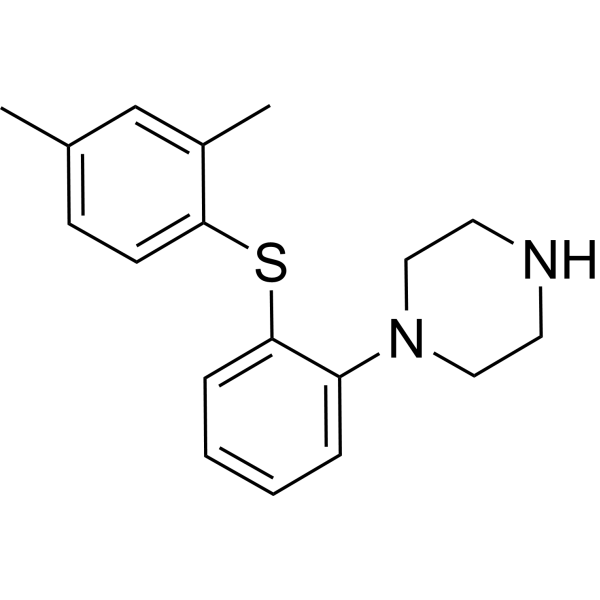 0 ImagesSynonyms: Lu AA 21004Vortioxetine (Lu AA 21004) is an antagonist of 5-HT3A and 5-HT7 receptors (Ki: 3.7 nM, 19 nM) and an inhibitor of serotonin transporter (SERT) (Ki: 1.6 nM), as well as a 5-HT1A agonist and a partial agonist of 5-HT1B (Ki: 15 nM, 33 nM).
-
GTS-21 dihydrochloride
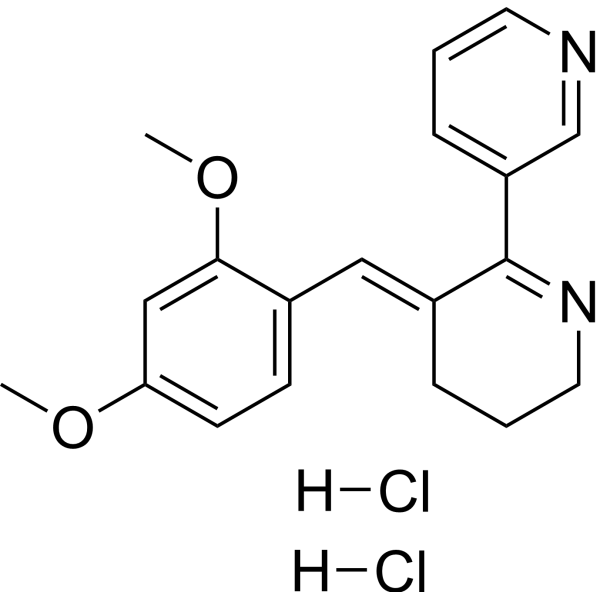 0 ImagesSynonyms: DMXB-A; DMBX-anabaseineGTS-21 dihydrochloride is a selective alpha7 nicotinic acetylcholine receptor (α7-nAChR) agonist with anti inflammatory and cognition enhancing activities. GTS-21 dihydrochloride is also a α4β2 (Ki=20 nM for humanα4β2) and 5-HT3A receptor (IC50=3.1 μM) antagonist.
-
Vortioxetine hydrobromide
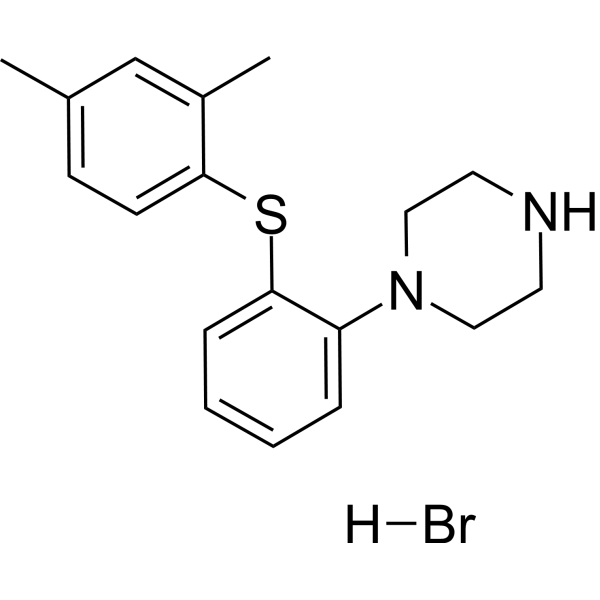 0 ImagesSynonyms: Lu AA21004 hydrobromideVortioxetine (Lu AA 21004) hydrobromide is an antagonist of 5-HT3A and 5-HT7 receptors (Ki: 3.7 nM, 19 nM) and an inhibitor of 5-hydroxytryptamine transporter (SERT) (Ki: 1.6 nM), as well as a 5-HT1A agonist and a partial 5-HT1B agonist (Ki: 15 nM, 33 nM).
-
m-CPBG hydrochloride
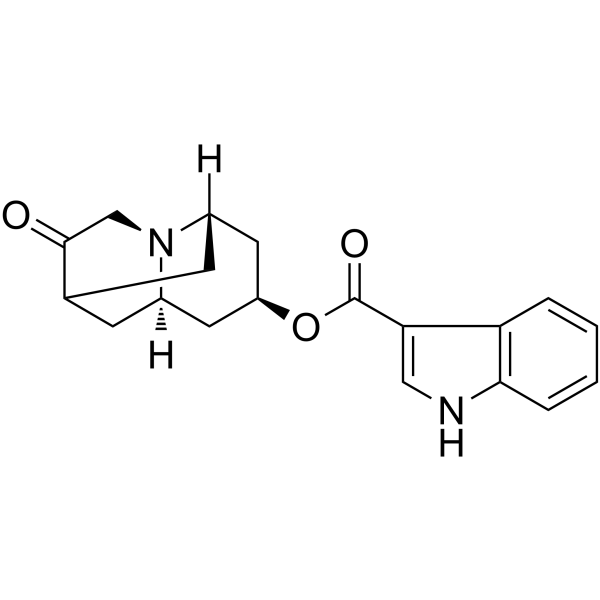
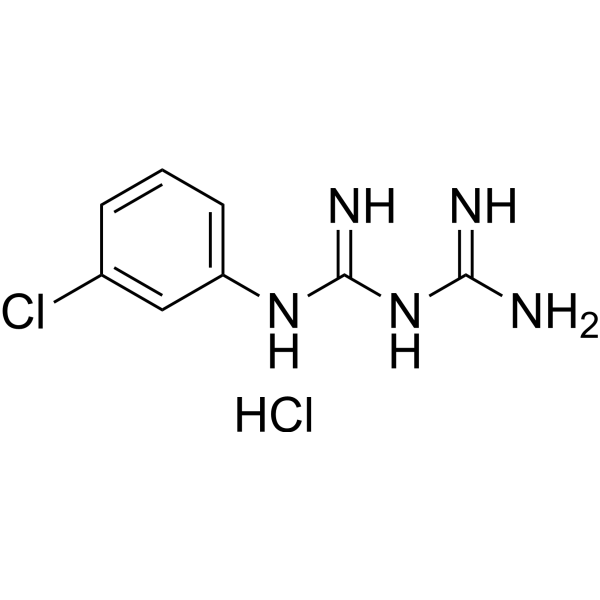 0 ImagesSynonyms: 1-(3-Chlorophenyl)biguanide hydrochloridem-CPBG (1-(3-Chlorophenyl)biguanide) hydrochloride is a selective 5-HT3 agonist. m-CPBG hydrochloride can be used for the research of neurological disease.
-
L-Linalool
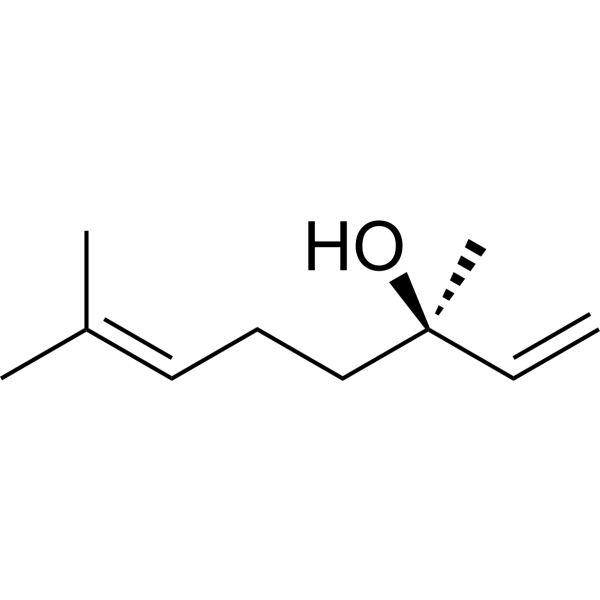 0 ImagesL-Linalool ((-)-Linalool) is a naturally derived monoterpene alcohol with oral activity, possessing neuroprotective, anti-inflammatory, and antioxidant activities. L-Linalool is a 5-HT3 receptor inhibitor and a benzodiazepine-responsive GABAA receptor enhancer. L-Linalool reduces nitrite and lipid peroxidation in the brain and partially prevents the decrease of striatal dopamine, DOPAC, and HVA. L-Linalool exhibits neuroprotective effects in hemiparkinsonian rats, cortical oxygen-glucose deprivation injury, and Alzheimer's disease models. L-Linalool prevents the decrease in tyrosine hydroxylase and dopamine transporter expression. L-Linalool can be used in research related to diseases such as Parkinson's disease and Alzheimer's disease.
-
Agmatine
 0 ImagesCat. No.: HY-WAA0304CAS No.: 306-60-5Agmatine is an orally active analgesic that can cross the blood-brain barrier. Agmatine targets the 5-HT2A receptor, 5-HT3 receptor, α2-adrenergic receptor, and I1 imidazoline receptor. Agmatine produces dose-dependent analgesic effects in various pain models. Agmatine can be used in research related to visceral pain, neuropathic pain, and inflammatory pain.
-
2-Aminonicotinaldehyde
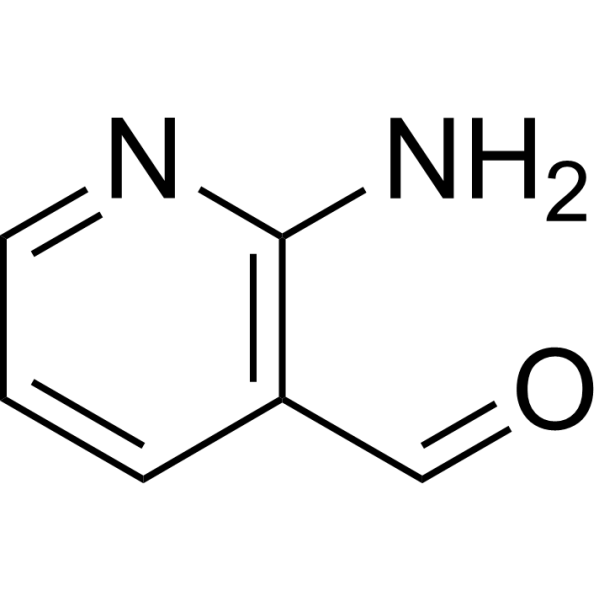 0 Images2-Aminonicotinaldehyde is a synthetic intermediate. 2-Aminonicotinaldehyde can be used for the synthesis of 5-HT3 receptor antagonists, AKT inhibitors, and other compounds. 2-Aminonicotinaldehyde is applicable to research on depression and cancers (including hepatocellular carcinoma).
-
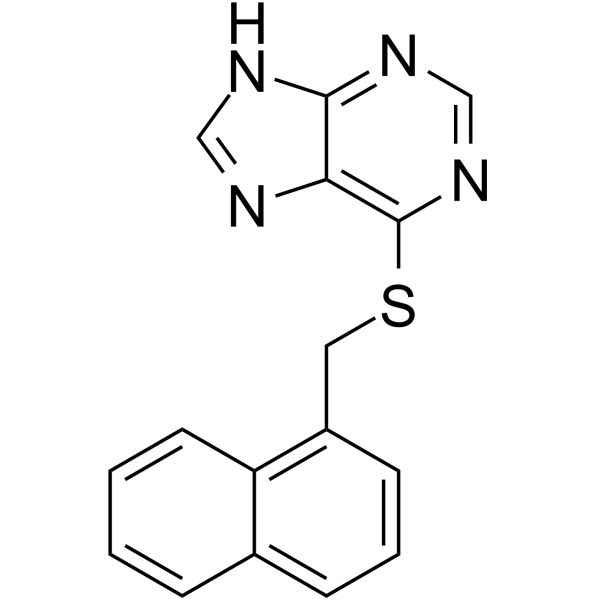
Quipazine dimaleate
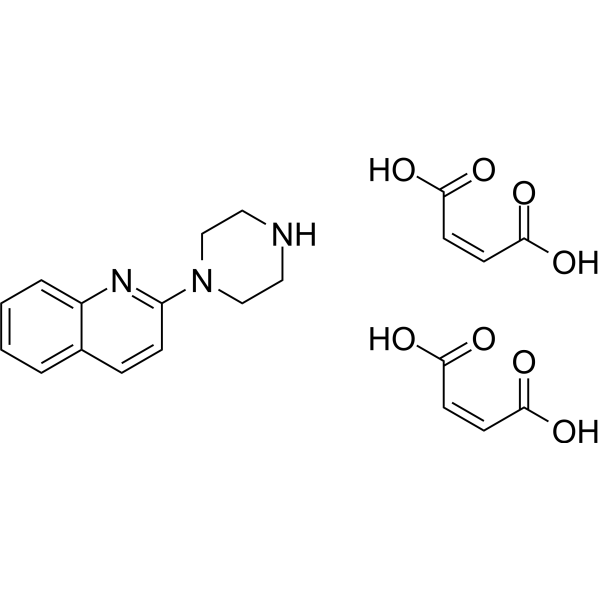 0 ImagesQuipazine dimaleate is a 5-HT agonist with a Ki value of 1.4 nM for displaces [3H]GR65630 from 5-HT3R in rat. Quipazine dimaleate shows antiviral activity against SARS-CoV-2 with an EC50 of 31.64 μM. Quipazine dimaleate behaves as a 5-HT3R antagonist in peripheral models. Quipazine dimaleate can be used for neurological disease research.
-
Vortioxetine (Standard)
 0 ImagesSynonyms: Lu AA 21004 (Standard)Vortioxetine (Standard) is an analytical standard for Vortioxetine. This product is intended for research and analytical applications. Vortioxetine (Lu AA 21004) is an antagonist of 5-HT3A and 5-HT7 receptors (Ki: 3.7 nM, 19 nM) and an inhibitor of serotonin transporter (SERT) (Ki: 1.6 nM), as well as a 5-HT1A agonist and a partial 5-HT1B agonist (Ki: 15 nM, 33 nM).
-
Ricasetron
 0 ImagesSynonyms: BRL-46470Ricasetron (BRL-46470) is a selective and orally active 5-HT3 receptor antagonist. Ricasetron displays little or no affinity for a variety of other neurotransmitter receptors. Ricasetron has anxiolytic and antiemetic effects.
-
GR119566X
 0 ImagesCat. No.: HY-185345CAS No.: 237752-42-0GR119566X is a 5-HT3 receptor ligand with a pKi value of 8.80 against prufied 5-HT3 receptor. GR119566X can be used for 5-HT3 receptor purification.
-
SERT/5-HT-IN-1
 0 ImagesSERT/5-HT-IN-1 (compound D17) is an orally active and potent dual target inhibitor of SERT/5-HT3A (SERT IC50 = 1.5 nM, NET IC50 = 49 nM, DAT IC50 = 91 nM, 5-HT3A Ki = 12 nM). SERT/5-HT-IN-1 has an IC50 of 39 nM to 5-HT3A. SERT/5-HT-IN-1 has a lower risk of liver, kidney, and cardiac toxicity. SERT/5-HT-IN-1 can be used for research on depressive disorders.
-
VUF10166
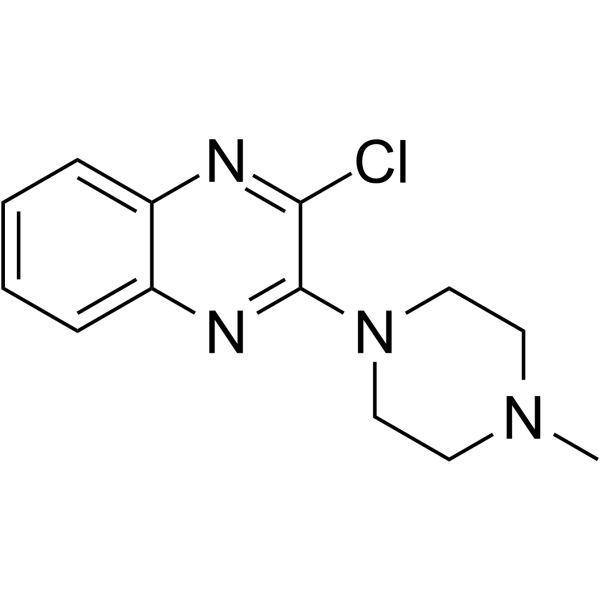 0 ImagesVUF10166 is a potent and high-affinity 5-HT3 receptor antagonist, with Ki values of 0.04 nM (5-HT3A) and 22 nM (5-HT3AB). VUF10166 inhibits 5-HT-induced responses at 5-HT3A and 5-HT3AB receptors at nanomolar concentrations. At 5-HT3 receptor, VUF10166 at higher concentrations also acts as a partial agonist, with an EC50 of 5.2 μM.
-
GR119566X dihydrochloride
 0 ImagesCat. No.: HY-185345AGR119566X dihydrochloride is a 5-HT3 receptor ligand with a pKi value of 8.80 against prufied 5-HT3 receptor. GR119566X dihydrochloride can be used for 5-HT3 receptor purification.
-
Vortioxetine-d8 hydrobromide
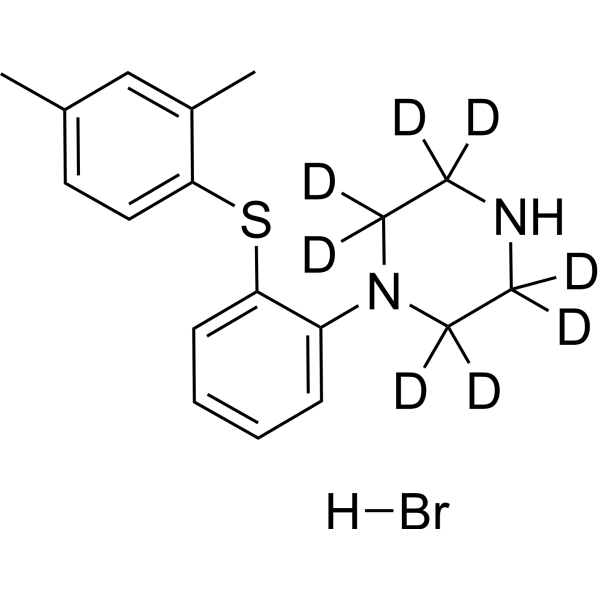 0 ImagesCat. No.: HY-15414ASSynonyms: Lu AA21004-d8 hydrobromideVortioxetine-d8 (Lu AA 21004-d8) hydrobromide is the deuterated form of Vortioxetine. Vortioxetine (Lu AA 21004) is an antagonist of 5-HT3A and 5-HT7 receptors (Ki: 3.7 nM, 19 nM) and an inhibitor of 5-hydroxytryptamine transporter (SERT) (Ki: 1.6 nM), as well as a 5-HT1A agonist and a partial 5-HT1B agonist (Ki: 15 nM, 33 nM).

-
KB R6933
 0 ImagesCat. No.: HY-105449ACAS No.: 148565-09-7Synonyms: KB 6806 maleate
-
5-HT3 antagonist-7
 0 ImagesCat. No.: HY-182701CAS No.: 149685-89-25-HT3 antagonist-7 (Compound 7e) is a competitive and selective 5-HT3 receptor antagonist. 5-HT3 antagonist-7 inhibits 5-HT-induced contractions in guinea pig ileum and guinea pig thoracic aorta. 5-HT3 antagonist-7 prevents 2-methyl-5-HT-induced vomiting episodes in ferrets.
- 1
- 2



